
With over 6.7 million U.S. households owning small animals, fluffy companions have become beloved family members across generations. Many owners notice their pets gravitating toward cardboard items – a behavior rooted in natural instincts. This comprehensive resource helps you navigate this common scenario responsibly.
Younger pet parents (particularly Millennials and Gen Z) often wonder about safe enrichment options. While gnawing helps maintain dental health, swallowing large amounts of material raises concerns. Our analysis draws from veterinary insights to separate myth from reality.
You’ll discover how to transform ordinary boxes into stimulating play structures while eliminating risks. We cover essential preparation steps like removing adhesives and sharp edges – techniques detailed in our safe preparation guide. Properly modified items can provide mental engagement without digestive hazards.
This section explains warning signs of overconsumption and alternative chewing solutions. You’ll learn to balance your companion’s natural behaviors with their wellbeing, creating a harmonious living environment that satisfies both curiosity and safety needs.
Table of Contents
Understanding Rabbit Chewing Behavior

Your fluffy friend’s urge to gnaw isn’t random—it’s biology in action! Those ever-growing teeth demand daily wear, similar to how humans trim nails. Without proper outlets, these natural instincts can turn household items into unintended snacks.
Instincts and Dental Health
A rabbit’s teeth grow 3-5 inches yearly. Constant grinding prevents painful overgrowth and abscesses. Wild relatives chew fibrous plants all day—domestic pets need similar stimulation.
| Animal | Teeth Growth Rate | Daily Chewing Needs |
|---|---|---|
| Rabbits | 0.3 mm/week | 4-6 hours |
| Guinea Pigs | 0.1 mm/week | 2-3 hours |
| Chinchillas | 0.2 mm/week | 3-5 hours |
Nutrition and Mental Stimulation
Poor diets low in hay drive excessive chewing. Timothy hay should make up 80% of meals to satisfy both hunger and dental needs. Bored pets often shred objects—rotate rabbit-safe toys weekly to spark curiosity.
Watch for these signs of trouble:
- Ignoring favorite foods
- Excessive drooling
- Loose stool after chewing sessions
Can Rabbits Chew Cardboard

What happens when your bunny nibbles on that shipping box? While occasional gnawing might seem harmless, it’s crucial to balance enrichment with safety. Small amounts of shredded material typically pass through their system, but repeated eating cardboard creates risks.
Assessing Safety and Digestive Health
Cardboard contains fibers that don’t break down like hay or greens. When pets eat cardboard regularly, the material can clump in their stomach. This might lead to:
- Reduced appetite from partial blockages
- Slowed digestion causing discomfort
- Nutrient absorption issues
Veterinarians emphasize that cardboard safe practices involve strict supervision. Always pair playtime with high-fiber Timothy hay to support healthy digestion.
Recognizing Warning Signs and Digestive Issues
Watch for these red flags after your pet interacts with boxes:
- Smaller or misshapen droppings
- Unusual lethargy lasting over 12 hours
- Refusing favorite treats
If you spot these symptoms, contact your exotic animal vet immediately. Early intervention prevents health complications from intestinal blockages. Remember: chewing should supplement their diet, not replace nutritious foods.
How to Introduce Cardboard for Enrichment
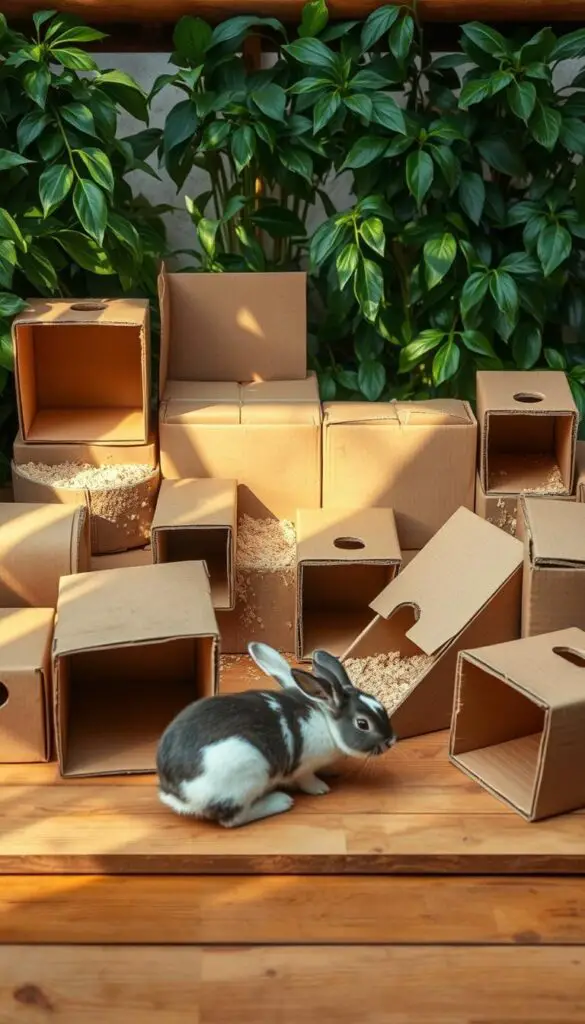
Safe cardboard use can turn household items into enriching toys while keeping your pet’s environment secure. Start by selecting plain, uncoated boxes—avoid glossy finishes or printed designs that might contain harmful chemicals. This simple choice creates endless opportunities for creative play without compromising health.
Preparing Materials Without Hidden Dangers
Always inspect boxes for tape remnants or staples before offering them to your pet. These small items pose serious risks if swallowed. Use a utility knife to slice through adhesive layers, then wipe surfaces with a damp cloth to remove glue residue.
Flattened pieces work great as protective mats near baseboards. Place them strategically to redirect natural chewing instincts away from furniture. Rotate these barriers weekly to maintain your companion’s interest.
Crafting Interactive Play Structures
Transform basic boxes into engaging tunnels by connecting multiple units with untreated paper tape. Hide hay-stuffed toilet paper tubes inside to encourage foraging behavior. For added fun:
- Cut entry holes in larger boxes to create hideouts
- Layer shredded paper between cardboard sheets for digging simulations
- Stack smaller boxes vertically to mimic burrow systems
Monitor play sessions to ensure your pet interacts with toys instead of eating them. Pair cardboard activities with fresh timothy hay to support healthy digestion and dental wear. This balanced approach keeps enrichment sessions both safe and stimulating.
Exploring Rabbit-Safe Alternatives to Cardboard

Variety keeps your furry companion engaged while protecting their health. The right mix of textures and materials satisfies natural chewing urges without digestive risks. Let’s explore options that combine safety with enrichment.
Grass Hay and Its Role in Dental Health
Timothy hay forms the cornerstone of healthy chewing habits. Its coarse strands naturally file down teeth while moving through the digestive tract. Pair it with orchard grass or mountain grass for texture variety.
Keep fresh hay available 24/7 in multiple locations. Place bundles near favorite lounging spots and inside play structures. This encourages natural foraging behavior while meeting daily fiber needs.
Wooden Toys, Bamboo, and Other Chewing Options
Untreated applewood sticks and bamboo rings offer durable surfaces for gnawing. Look for toys colored with vegetable-based dyes if adding visual interest. Rotate different shapes weekly to maintain curiosity.
Try these engaging alternatives:
- Willow balls for tossing and nibbling
- Pinecones baked to remove sap
- Crinkled packing paper (soy-ink only)
Always supervise new items until you’re certain they’re being chewed, not eaten. Combine these toys with ample grass hay for balanced enrichment that supports overall wellbeing.
Creating a Rabbit-Safe Living Environment

Your furry friend thrives in spaces designed around their natural habits. Smart layout choices prevent boredom while supporting physical health. Let’s explore how to build a habitat that keeps tails wagging and teeth grinding safely.
Setting Up a Stimulating Cage and Play Area
Place hay racks in three key spots: near resting areas, beside water bowls, and inside the litter box. This setup mirrors wild foraging patterns. Add cardboard tunnels between stations to encourage movement.
Include at least two hideouts per enclosure. Untreated wood houses or overturned baskets work well. Rotate these weekly to maintain novelty without overwhelming your shy companion.
| Bedding Type | Safety Level | Recommended Use |
|---|---|---|
| Aspen Shavings | High | Full cage lining |
| Paper Pellets | Medium | Litter areas |
| Grass Mats | Premium | Play zones |
Bedding Choices and Litter Box Enhancements
Swap traditional clay litter for grass-based options. These natural textures feel familiar under paws and are safer if nibbled. Gotta Go Grass® pads make cleaning easier while providing edible surfaces.
Check bedding moisture daily. Damp materials grow mold that harms respiratory systems. If you notice rabbit eating bedding excessively, increase hay portions immediately.
Layer fresh timothy hay over litter boxes. This clever trick satisfies the urge to munch during bathroom breaks. Combine with weekly toy rotations to create a stimulating environment that supports both play and health.
Wrapping Up Your Rabbit Care Journey
Creating a thriving home for your bunny involves balancing natural behaviors with safety. While cardboard boxes offer temporary fun, prioritize grass hay and wooden toys for daily enrichment. These alternatives support dental health without digestive risks.
Always clean chewed debris promptly. Leftover particles might tempt your pet to re-eat unsafe materials. Spot-check play areas after each session—remove shredded bits before they accumulate.
Watch for changes in chewing patterns. Reduced interest in food or irregular droppings signal potential digestion issues. Contact your vet immediately if these occur—early action prevents complications.
Rotate enrichment items weekly to maintain engagement. Combine tunnels, untreated sticks, and fresh hay piles. This variety meets instinctual needs while protecting your companion’s health.
Remember: every bunny has unique preferences. Tailor their space using insights from this guide. With thoughtful adjustments, you’ll build an environment where curiosity and wellbeing flourish together.


