
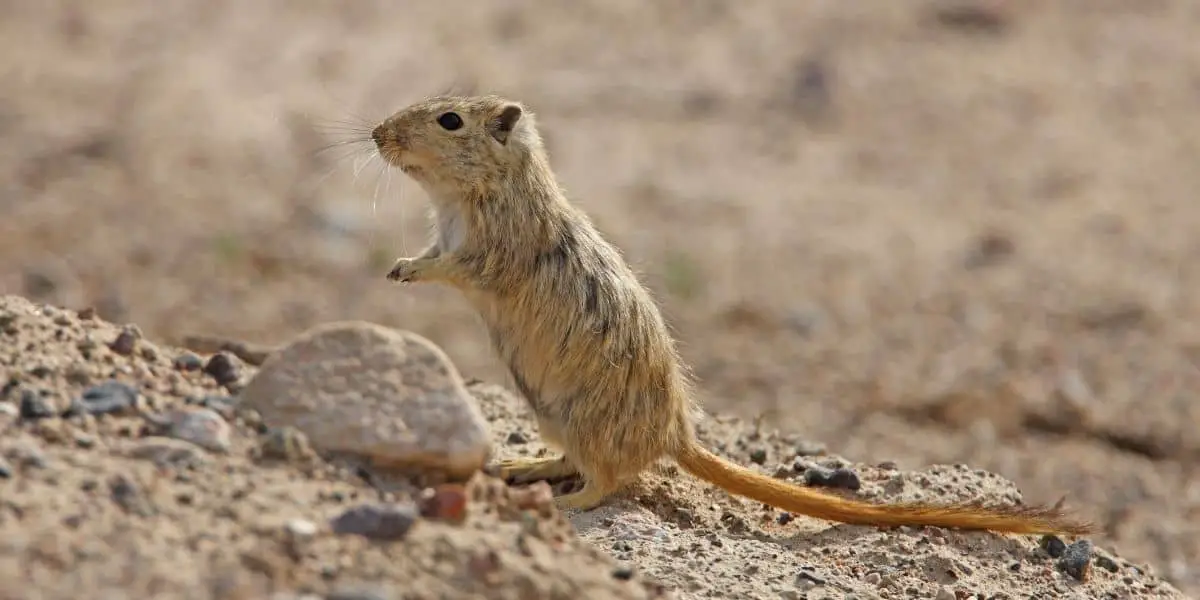
It can be pretty scary watching your gerbil stand on their back legs and make loud sounds when they jump. It can get scarier when the entire cage starts doing it, but you don’t understand why. Why do gerbils thump their feet?
The main reason gerbils thump their feet is to warn other gerbils about dangers. Gerbils will also thump their feet to let a female know they want to mate. This behaviour is completely natural, and it’s just one of the ways for gerbils to communicate with each other.
Table of Contents
Drumming
This action of thumping their feet is called drumming, and yes, it is because it sounds like a drum.
If you’ve ever noticed your gerbil standing on their back legs and taking tiny hops, they might be drumming. If you want to see or hear what it sounds like, check out this video.
How cute was that? Yes, I know, it made me want a gerbil too! They make a surprisingly loud noise for such a small animal.
Danger
When living in the wild, one gerbil is stationed outside of the burrow to watch for predators. If they see anything, or they get a sense of uneasiness, they will drum to alert the other gerbils of impending danger.
A drum to announce danger often resembles a few short drums followed by a short pause and then it repeats. The other gerbils understand this warning, they will also start drumming until all the gerbils have been alerted, and they take shelter.
A gerbil in a cage isn’t going to have a predator lookout, but there may be something scaring your gerbils. If you see a couple of your gerbils drumming, you should try to find out what’s scaring them or stressing them.
Smells
Are there any new smells in your home? Did you clean your floors or light a candle? Your gerbil may just be reacting to something out of the ordinary in their home.
This doesn’t mean you have to stop using anything scented, just be aware they will probably drum until they are used to the smell.
Noises
Noises are another big stressor for gerbils. If they are near a loud TV, or if there is construction work being done nearby, you should move them someplace quieter.
Movement
A lot of things that move around the house are bigger than gerbils, and that can be pretty terrifying. Other pets, children, strangers who enter the house, and even you, can appear threatening as you walk by.
If you’re worried about how often your gerbil is drumming, there are some things you can try. You won’t be able to stop the drumming completely, it’s just their way of saying, “something isn’t like it normally is”.
- Don’t put them in a high-traffic area of your home. The living room and kitchen are going to be loud a lot of the time and putting them somewhere quieter will reduce stress.
- Watch your movements. Don’t approach them too fast or reach into their cage quickly. This can make your gerbils feel threatened.
- Try to keep your gerbils in a space away from other pets. The movement and the smell make the gerbils feel like they are being hunted.
Mating
Male gerbils will drum when they are ready to mate. If you watch your gerbils closely, you might be able to tell the difference between the danger drum, and the mating drum.
The mating drum is quite a bit softer, and it’s more irregular. There could be no pauses in a male’s mating drum compared to the thump-thump-pause repetition of the danger drum.
This drum is quieter, so the other gerbils understand the difference. The entire clan doesn’t need to be alerted and start replicating the drumming pattern to warn the rest to take cover.
So, if you notice only one of your gerbils is drumming, you might be watching him get ready to mate.
When a female is in heat, which happens every four or five days, a male will drum to let her know is ready to mate. After they have finished mating, both the male and the female may start drumming.
If you have any male gerbils in the cage with females, there’s no way to stop this sort of drumming. The female could be on the other side of the room, and yet you can still find your male gerbil drumming every four to five days.
Final Thoughts
You can’t fully stop your gerbil from standing on their back feet and drumming, it’s a way for them to communicate with each other.
This little tap dance is completely normal, but if you are worried about how often your gerbil appears to be stressed, there are some things you can do about it.
Drumming often does not affect a gerbil’s well-being, so congratulations on your healthy, happy little friend.