Are you getting your dog’s fur trimmed soon but don’t know what cut to choose? Your pet’s stylist probably has plenty of options for you to choose from, so it can feel overwhelming sometimes.
You’ll want to know the differences between all of the basic cuts before selecting one of them.
The difference between a teddy bear and a puppy cut is the type of fur the cut works best on. Both cuts involve evening the fur around your dog’s body, but teddy bear cuts are for dogs with curlier hair. Puppy cuts are for a broader range of fur types.
What’s the difference between a teddy bear cut and a puppy cut? You’ll be an expert when you finish reading, so let’s begin!
Table of Contents
How are Puppy and Teddy Bear Cuts Different?
Both cuts make the fur an even length around the dog’s body. However, the main difference is how the stylist cuts the fur around your dog’s face. Your dog will get a rounder, fluffier cut around its head with the teddy bear cut.
The puppy cut is a single length, including around the face. Both cuts can look very similar, but the teddy bear cut is usually on curly-haired dogs.
This table helps break down the differences and similarities between the two grooming styles:
| Name of Cut | Teddy Bear | Puppy |
| Features even cut around the body | Yes | Yes |
| Fur types it suits the best | Curly, wavy fur or hair | Any type |
| Features rounded areas around the face (and sometimes legs) | Yes | No |
| Fur length | 1 – 2 inches | 1 – 2 inches |
What’s a Teddy Bear Cut?
Teddy bear cuts are incredibly similar, with a few minor key differences. The teddy bear cut is generally for dogs with curlier or wavier hair. It’s a mostly even cut. The stylist gives the dog a round head shape, but the hair is the same length everywhere else. Some people prefer to have the legs appear round too.
This particular cut gets its name from the rounded shape of the dog’s face, which resembles a toy teddy bear. Keeping this in mind can help you to remember the difference.
The cut is simple and neat, making it perfect for keeping your dog’s curly hair from tangling. It generally lasts about a month before your dog needs another trim.
When To Choose a Teddy Bear Cut
You can choose a teddy bear cut to maintain your puppy’s fur and emphasize its face. This cut type is usually better suited for dogs with thick curly coats. Many people view it as a puppy cut for dogs with a specific hair type.
In short, it’s an excellent option for keeping your dog’s fur free from matting and tangles since it’s the same length all over. It’s easy to maintain and looks cute on any dog breed.
What’s a Puppy Cut?
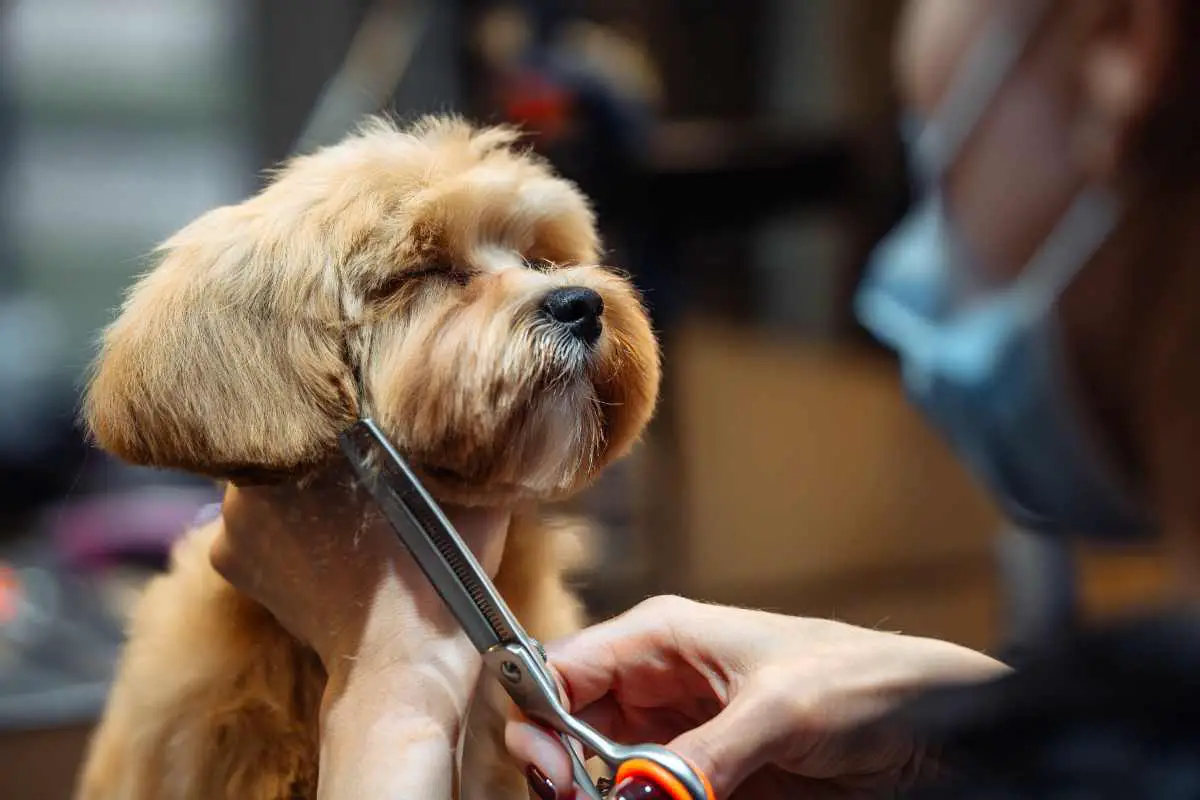
Many people mistakenly believe that puppy cuts are only for young dogs. However, that’s not the case— dogs of any age can get a puppy cut and look great. Puppy cuts involve trimming the fur evenly over your dog, usually keeping it only an inch or two long.
Your pet’s stylist will use fur clippers with a guard comb to cut your dog’s hair as evenly as possible, removing any uneven hairs. The finished cut is a single length all over the dog’s body. After getting a trim, your dog’s fur will feel soft, just like a puppy’s.
This cut usually lasts one to two months, depending on how quickly your pup’s fur grows. It’s not super short, so consider something shorter if you’re getting this as a summer cut to keep your dog cool.
The puppy cut is the standard for dogs, no matter their fur type. It’s a reasonably versatile cut, so dogs with short or curly hair can get it.
When To Choose a Puppy Cut
The puppy cut is best if you want to remove your dog’s old, matted hair. Since it’s an even cut, it removes the tangled hair and lets your pet grow in new fur. It’s comfortable for them and is a universal cut, so it looks good on all dogs, no matter their size or fur type.
You should choose this cut to maintain your pet’s fur coat, keeping it soft and tangle-free. It’s perfect for breeds like poodles, who have curly hair.
The puppy cut is a great start if you’re cutting your pet’s hair for the first time. Most stylists are very familiar with it and offer it as a specialized cut.
Final Thoughts
So, what’s the difference between a teddy bear cut and a puppy cut? Puppy and teddy bear cuts are very similar. You’ll want to talk with your pet’s stylist so they know exactly what you want. It’s better to check that you’re on the same page since these two cuts are nearly identical.
Meta Description
Not many people know the differences between puppy and teddy bear cuts. While similar, teddy bear cuts have rounded areas on the fur.