When you have a pet, you naturally want to do everything possible to keep it happy, healthy, and comfortable.
You have probably invested a pretty penny in buying your pet, toys, and other accessories and spent countless hours researching all things relating to your pet.
You want to do right by your bird, but whether your cage is on the small end or huge, cleaning your bird’s cage can be quite a task.
Consistency is key. Just as you would want to live in a habitable and clean home, so does your bird.
Birds are rather sensitive creatures, and maintaining a healthy ecosystem is good for your bird’s general health and well-being.
If you ever felt overwhelmed by keeping your bird’s cage spic and span, below is a list of tips that will make the job easier.
If you’re looking to upgrade your current cage then check out our favorite here!
Table of Contents
10. Create a system
Just like maintaining order in your house, some things need to be done daily, some weekly, and some even monthly.
Create a checklist of the essentials for your day-to-day, weekly and monthly schedule.
For example, you can wipe down the cleaning area daily to remove any food residue, which may become moldy.
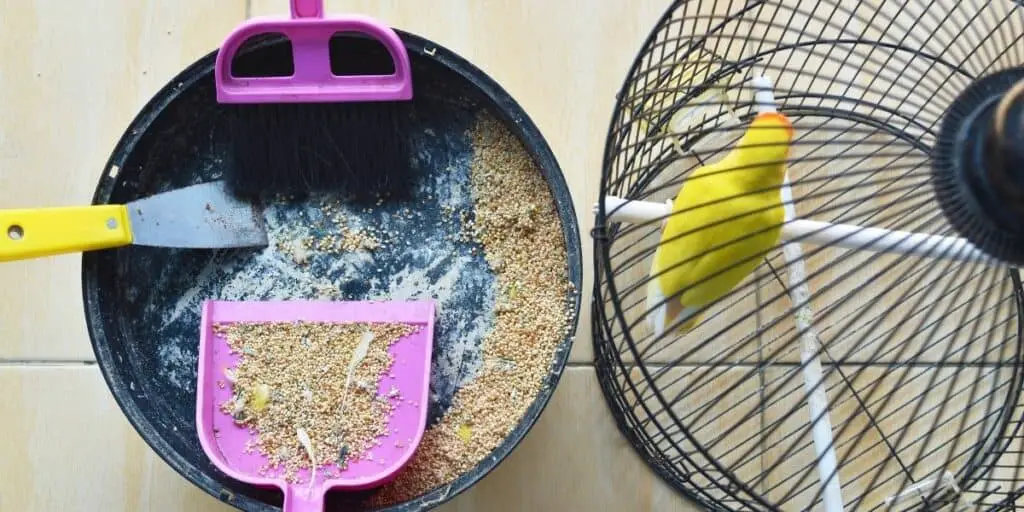
Then disinfect weekly, and finally give the cage a proper scrub down every month.
If you strictly follow whatever system you have laid out, it reduces the time you spend on cleaning and makes the process more manageable.
Plus, with a system, you won’t feel so overwhelmed all the time. It helps to type out and print your schedule and stick it to a wall in the bird’s room.
By doing so, even if you aren’t there, whoever you leave in charge of your favorite pet, will know just what to do.
9. DIY detergents
Not all chemicals are suitable for your birds or even the environment.
And not all detergent makers disclose what they’ve put in their products. Some of the stuff will harm your bird or you.
Natural detergents are, therefore, preferable for cleaning your birdcage.

However, if the cost of eco-friendly cleaners is on the steep end for your budget, there are easy DIY options that get the job done.
Like this simple cleaning formula, for example.
Simply put three cups of hot water in a spray bottle, add three tablespoons of baking soda, and two tablespoons of lemon juice.
Shake it up, and it’s ready to use. You can use it to scrub down your bird’s cage and clean food residue. It works both as a cleaning and deodorizing agent.
Alternatively this product on Amazon.com we use this one ourselves.
8. Consider your feed
If you feed your bird pellets instead of crumbed foods and seeds, there will be less residue in the cage to clean up.
Using pellet-type foods will thus, lessen the time you spend on cleaning up.
That way you can have lots more time to enjoy your feathery friend.
7. Work your way down
Birdcages accumulate dust quickly, which can be hazardous for both you and your bird.
For your regular wipe down, wipe your cage from the top and work your way down.
Wiping from top to bottom ensures that you clean efficiently and effectively.
6. Manage droppings
Birdcage droppings will probably constitute the bulk of your dirt and need to be cleared daily without fail.
If not managed properly, it can take you a long time to clean up after your bird and droppings tend to stick to the surfaces.
For a quick fix, place an old newspaper at the bottom of your cage and spray a few drops of your cleaning detergent.
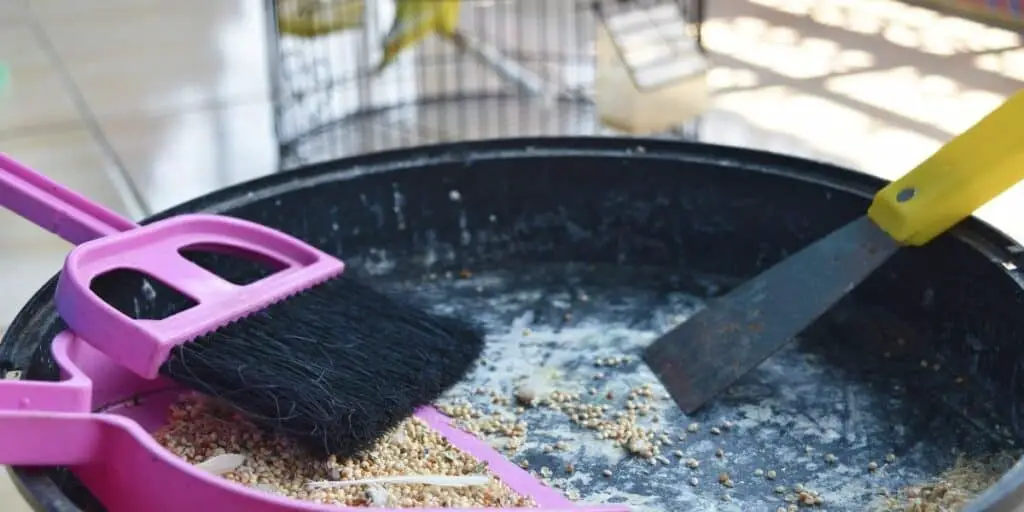
The newspaper trick will ensure that most droppings are caught on the paper, making it easy for you to clean.
All you have to do is pull it out and replace it with another one.
Spraying some of the cleaning detergents onto the newspaper helps keep it in place and traps dust.
You can also use anti-microbial paper or clear plastic to catch droppings under the cage.
You can simply spread the sheeting in the floor perimeter under the cage, saving you cleaning time.
5. Invest in the proper cleaning accessories
To take proper care of your bird’s home, it is essential to select cleaning tools that get right to the job.
Microfiber cloths are ideal for wiping down surfaces and removing dust from the cage.
The soft texture of the cloth makes it easy to remove dust and other particles.
Other tools that clean right between the bars are baby bottle cleaning brushes and even toothbrushes.
These have bristles that are small enough to fit through the tiny bars and scrub away all the debris.
4. Consider using a steamer
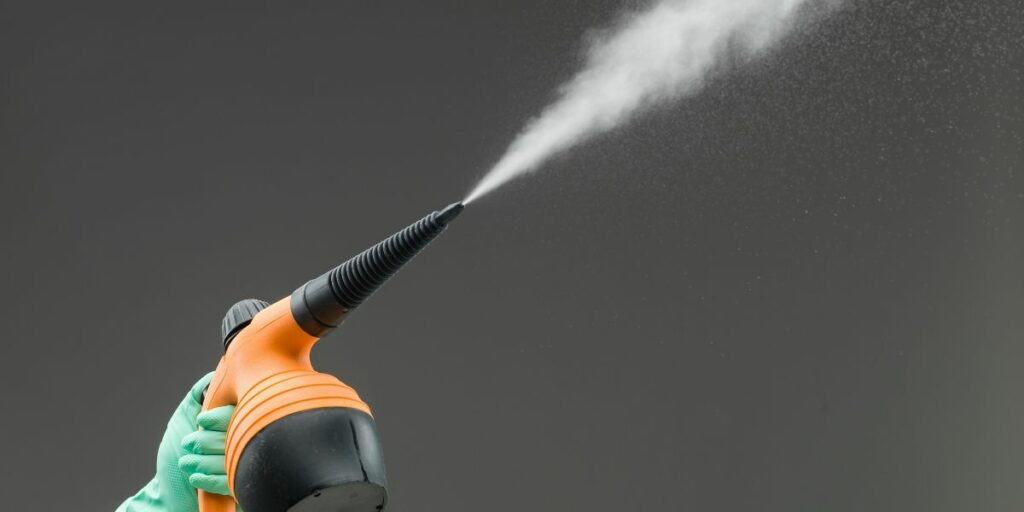
A hand-held steamer is one of the quickest ways to clean your cage. This accessory both cleans and disinfects your bird’s cage in one go.
And, another benefit of using a steamer is that it does not use chemicals that can be harmful to you and your bird.
See a suitable handheld steam cleaner here on Amazon.com
3. Keeping the perch clean
Your bird spends the majority of its time on its perch. This will likely result in the perch needing regular cleaning throughout the day.
One way to avoid this is to wrap the perch in a soft and absorbent material that can be replaced in minutes.
2. Invest in artificial turf
Not only do you want a healthy, clean home for your bird, but also a warm environment that your bird will love living in.
Artificial turf will add some color and comfort to your bird’s habitat while also making cleaning less tedious.
Just line the turf at the bottom of the cage and vacuum it once a week, removing the need for daily cleaning.
The turf will need proper scrubbing and drying at least once a month.
1. Make use of flaps
As birds eat and nibble at their toys, a lot of residues tend to fly around the cage area.
Making use of acrylic and mesh flaps helps to contain the debris within limited confines.
Keeping the little bits of residue confined will reduce the time you spend cleaning up after your birds, as your cleaning will be limited to specific areas.
Final Thoughts
To conclude, cleaning after your bird doesn’t have to be a nightmare.
Plan, coordinate your efforts and make the necessary additions that will make your cleaning process shorter, leaving you with free time to enjoy with your pet.